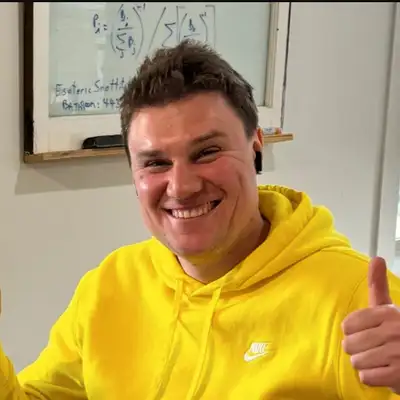
2 - On Track! Detective Work! Technical Quirks! (w/ Support Engineer Michael Green)
Did you know very few podcast apps support episode numbers?
Ian:Hello, and welcome to the second episode of High Low Piccolo with Ian Steyn, where I share with you a success, a challenge, and something interesting I learned in the past week. I am the titular Ian Steyn, a curious guy and computer science student doing a summer co op at Transistor FM, the company that hosts and distributes this very podcast. And I am joined today by Michael Green.
Michael:Nice to be with you, Ian. Pleasure to be on the podcast. Thanks for having me.
Ian:Michael has been teaching me the ropes. He is a real customer support engineer
Ian:and Not a bot.
Ian:He's not he's not AI. It's true. He's real and I'm real, and he's been teaching me how to be a real customer support guy.
Duet:HIGH
Ian:So, Michael, what in this week as a customer support engineer was your high? What's the success you've had this week?
Michael:I think it was getting back on track after we got inundated with interest last week. So, you know, you've joined us at a really interesting time
Ian:Yep.
Michael:Where we're releasing this video beta feature. So, yeah, we got sort of inundated for the last week or so, which is great. It's nice to be busy and nice to be in the spotlight.
Michael:And but, yeah, it's taken a lot of time to work through that. And now by the end of this week, I think we've added over a 100 shows to the beta. It's up and running. And we've got a really nice workflow around expanding that. We've got help docs for people so they know what they're doing when they join and I think we're back on track.
Michael:So that's my high this week is Yeah. After a lot of activity last week getting getting organized again and and back to pretty much inbox zero. Feels nice.
Ian:Yeah. I mean, I was telling you, like, I I barely even know what the status quo is because it's just been this video stuff the whole time. But, yeah, that makes sense. Feels good to be back on track.
Michael:Yep.
Ian:Yeah. For me, I think this week, just felt really good about being able to answer some more complex questions in customer support. Like, you know, my first two weeks, I was getting questions like, how do I change this thing in settings? And then I would just go look, and I'd be like, okay. This is how you do it. Yeah. You know, easy stuff like that.
Ian:This week, I've been able to dig a little bit deeper and just I've had, like, several longer conversations. I thought of it as, like, detective work. I did the deep dive on Apple episode numbering.
Michael:Mhmm.
Ian:I figured out how to use some custom CSS to hide a trailer. I tested how Spotify video imports works and how that affects analytics.
Michael:And Spotify private podcasts.
Ian:Yeah. I looked into that today. I looked at Spotify Open Access and and what that looks like. So I think it just feels good to, like, put that little bit of extra effort in and feel like I actually know the answer to a customer's question and that I can really help them, like, solve their issue.
Michael:Yeah. For sure.
Ian:I think, actually, you've been encouraging me to to do that a lot, to, like, create my own test shows and actually just see how stuff works instead of just guessing at it.
Michael:Right. Yeah. I mean a lot of what we're trying to do in troubleshooting in general is replicate an issue before we can solve it. Yeah. But then a lot of what you've been doing by creating your own test shows and seeing how they work with Apple and Spotify and so on. It's sort of mimicking a QA workflow that you would do if you were rolling out a new feature as well. So I think that's quite interesting like getting into the tech space. Really using the product and using the feature and seeing where the edges are. Yeah. That's been really useful.
Ian:I think something that stood out to me about the way that you've kind of been teaching me to do stuff is that we're not just trying to, like, clear the ticket, get the customer to stop talking to us.
Michael:Mhmm.
Ian:And I've definitely felt that way as a customer before working with companies. But here, it's definitely felt like our goal is solve the person's problem, you know, answer the question that they're really asking, like, try to understand what they're actually trying to figure out even if what they say doesn't make sense on a first read.
Michael:Yep.
Ian:We're not just trying to, like, get them out of our hair. So that's been cool.
Michael:And I think that's what we can do as human tech support agents rather than bots is we can actually employ human empathy to understand more than just the question being asked, but actually anticipate other needs and what's really underlying their questions. Right?
Ian:You're totally right, Michael. Would you like me to draft a summary about that for you? I've actually been a bot the whole time. Haha.
Ian:No. I agree, for sure.
Duet:LOW.
Ian:So I'm about to ask you what was your low this week, but just to put it into context, I kind of said this on my first episode last week, but really a better name for this section is, like, challenge. What's been a challenge you faced?
Ian:I think low has, like, a negative connotation to it, but it also just, you know, High Low Piccolo has a nice ring to it, that's why I call it a low. But it's not necessarily something bad. It's just something that you had to work around or learn something about. There's always a learning opportunity in those things that are harder. Right?
Ian:So what was your low this week?
Michael:So I think the thing - the challenge - I've had is that generally these days I don't come into the office much and I work from home. And I have a nice recording set up at home. Another big part of my role is doing demo calls with potential customers.
Ian:Right. Yeah.
Michael:But also jump I like to just jump on calls with customers and screen share, do a video call, see their problems, see them using the product live and help them that way. And I've got a really nice setup at home to do that with you know good hardware and dual monitors and everything. And this week coming into the office for training, I've sort of been using a mobile setup on the fly, and I'm realizing it's not not as good not as good hardware, not as good sound quality, probably not as good as a demo experience for the customer. So that's been my challenge and it's got me thinking about how I can emulate what I already do at home on the road
Ian:Right.
Michael:While I'm moving around.
Ian:How can you make it more mobile?
Michael:Exactly. So that's that's my low slash challenge for the week. How about you?
Ian:Yeah. Yeah. My low this week was the kind of wild goose chase that I went on. So I'm working on a project to create an integration between our customer support software, Crisp, and our project management software, Shortcut, which will let us create Shortcut tickets directly from crisp conversations.
Michael:Mhmm.
Ian:So, I mean, you know this, but people at home might not. Sometimes we have to escalate issues from customer support to our engineering team because they can do things, in the code base that we can't. Mhmm. So then we have to, like, log a special ticket for them, make sure that it's on their to do list. But that takes time, so we wanna speed up that process for us a little bit.
Ian:So we're trying to connect Crisp and Shortcut.
Michael:Mhmm.
Ian:Both of those have APIs, which stands for Application Programming Interface.
Michael:Mhmm.
Ian:And those let you get data and perform actions for both of the pieces of software that we're working with using, like, my own custom code. But that code needs to run somewhere. Mhmm. It needs to be triggered somehow. And so I kinda spent my whole week trying to wrap my head around that and how that would work.
Ian:And then I was trying to wrap my head around how do I even start to test anything Mhmm. In a way that's secure without putting all my information out on the Internet. So I researched what sounds like a bunch of gibberish, webhooks and web servers and restful interfaces and cloud workers and ngrok
Michael:ngrok. Yeah.
Ian:and API tokens and homebrew and so on and so on and so on.
Ian:And so I've learned a lot in the past week about the modern Internet and, you know, REST APIs are super important. Right? And this is kind of the I'm finally getting a chance to work with them. And I do feel now like I have a grasp on most of the parts of the project, like what needs to happen.
Ian:But I also need help from other people, other members of our team to get things set up Both on the cloud and on my own machine. And other people are busy. Yep. They can't drop everything just to, like, help me with my little project. So I'm also learning to be patient
Michael:Mhmm.
Ian:And to kind of try to find other parts of the project that I can flesh out and, you get a better understanding of the requirements or the limitations while I'm waiting. But, yeah, that's been a a challenge this week.
Michael:I think like you say though, you've probably learned a lot just by researching and also just like with coding in general, sometimes learning the wrong way gets you close to the right way.
Ian:Yup. Yup.
Michael:You know? So learning how you're not gonna design it and build it is still a step in the right direction.
Ian:Yeah. I understand now why there are certain things that I can't do. Like, even for security reasons. I Yep. Told you I can't run API calls in the front end in a browser because if that was running on a web page, anybody could see all my credentials.
Michael:Yeah.
Duet:PICCOLO.
Michael:Alright.
Ian:What's your Piccolo?
Michael:Okay. So my Piccolo oh, what's wait. What's the context for Piccolo? For those who are just joining the show for the first time this week.
Ian:First time listeners.
Michael:I know the audience is growing rapidly from week to week
Ian:Jumping on episode two. They couldn't make it through those first eight minutes of episode one.
Ian:Piccolo is really just a random word that rhymes with low because it's something interesting that you learned this week.
Michael:Okay. So I've been looking a little bit into private video podcasting.
Ian:Right.
Michael:With the advent of video podcasting a lot of people have been asking the natural question, can I have a private podcast that's video for my subscribers? And the answer is sort of yes and no. Where I've been demonstrating with people how they can use Spotify and YouTube to have some sort of private video offering. But what I was really hoping to find was that there would be some of the smaller apps using the video alternate enclosure tag in the feed
Ian:Right.
Michael:To make video available for subscribers there. So what I've found, was testing apps like Fountain and TrueFans, both apps that allow you to subscribe to a private feed in your library. And they're both apps that support video podcasting but they don't support those features combined. So you can't have a private feed that uses video in the alternate enclosure tag and watch a private video podcast in those apps.
Ian:Right.
Michael:So that's my Piccolo is sort of the state of private video podcasting right now. It's a very new space and there's not much support for it on the player side as Yeah. As things stand.
Ian:You kind of would there's things that you would like expect because of what's supported by the standard. Video is supported. Private podcasts are supported.
Michael:Right.
Ian:But there's not apps that are like doing both at the same time, is kind of a natural next step.
Michael:Exactly. So, yeah, with at Transistor, we're sort of doing our bit where we let you upload private videos to a private show, and then we put that in each subscriber's RSS feed, and we're sort of waiting for the industry to move that on the move with that on the player side and support it on their side.
Ian:Right.
Michael:So that's my that's my Piccolo.
Ian:Cool. That is interesting. Mine actually is is also about podcast apps supporting stuff. Okay. So very few podcast apps support episode numbers.
Michael:I didn't know that, by the way. Just I did not know that. Yeah. I've been looking at this for years.
Ian:New information for you this week?
Michael:It's a Piccolo to me as well.
Ian:I mean, you knew it as of, like, Wednesday or whenever I learned it.
Michael:Yeah. I got early access to this Piccolo.
Ian:But, yeah, it sounds if I say that, it just kinda sounds incorrect. Right? Because obviously, like, you see episode numbers and podcast titles all the time.
Ian:So what I actually mean is episode numbers outside of the titles. So back in 2017, Apple started really pushing for a consistent episode numbering format. I guess they were kind of they wanted to make their app a more unified experience or something like that.
Ian:They didn't like that some shows did, you know, E34 for episode 34 and some shows did #34 and some did, you know, just the plain 34. Yep. So they created this new tag for their own podcast standard that they use in RSS feeds. It's called itunes:episode . And then in the next few years up to, like, 2019, they emailed everybody that was using Apple Podcasts and they said, listen. "You gotta put episode numbers in this new tag of ours. Don't put it in the titles." They made it sound very serious.
Ian:And then few years later, the Podcasting 2.0 standard, they also added support for episode numbers. That's the podcast:episode tag.
Ian:In theory, these tags make it easier for computers to read the episode number. And so then you can, you know, search by episode number or whatever. And they reduce clutter in episode titles. But what happened in practice is that none of the other major platforms supported episode numbers in the form of the tag. And so then people started putting two different titles for each episode in their feeds. So they put one title with the episode number in it, in just the normal title tag, and then they would use the itunes:title tag to put a title with no episode number, and that would override on Apple Podcasts specifically.
Michael:Yep.
Ian:And so the silliest part of this - I don't know if I told you this - but the silliest part is Apple doesn't even show the episode numbers on the main page. They only show it on the episode page, which kind of makes it useless.
Michael:Kind of redundant. Yeah. There's not really much of, like, a I mean, it's still helpful, but not as helpful as it could be. So Pocket Casts and True Fans are, as far as I could find, the only other apps that support the episode number tags. And they both do it better. They will show episode numbers everywhere.
Michael:Yep.
Ian:I started looking into this because someone asked me, "Hey, you know, back in the day, was told I need to give two separate titles for every episode, one with an episode number, one without. Do I still need to do that now that I'm on Transistor?"
Michael:Mhmm.
Ian:And what I found was, well, first of all, you can't do that on Transistor.
Michael:Mhmm.
Ian:But then also, no. You really don't have to do that. Apple was really insistent about this for a while, but they actually don't care. They're not gonna take your show down. So Until all the other platforms support those episode tags, might as well keep putting numbers in your title.
Michael:Exactly. I think the other thing that people don't always realize when they're new to podcasting is that the episode numbers have nothing to do with the ordering of an episode.
Ian:Right. That's right.
Michael:Yeah. So episodes are only ever ordered by the published date and time and the episode numbers could be all out of order and it it won't make any difference.
Ian:Well, Michael, this has been High Low Piccolo. Is there anything that you would like to say before you go?
Michael:No. I mean, it's been an absolute pleasure being here. I I'm floating on cloud nine right now. Wow. It's just been such an unbelievable experience being on the podcast.
Ian:What a high compliment.
Michael:Yeah. It's an honor to be the first guest on the podcast. I'm I know it's going places. By this time next year, I hope maybe you've reached your fifth hundredth episode.
Ian:Wow. I'm gonna have to do more than weekly to reach my fifth hundredth episode, man.
Michael:But yeah, it's been a great week. And you know, thanks so much for taking on more and more of the responsibility this week. It's it's great to have you on board, it's been a lot of fun.
Ian:So next week, you retire and I take over completely.
Michael:Yeah. That's it. You'll never hear from me again, listeners at home. I'm done after this podcast.
Ian:Alright. This has been the High Low Piccolo with Ian Steyn and Michael Green. Thanks for listening, and tune in next time to hear about more interesting stuff that I am learning.
Creators and Guests